
Do you know what Coltan is?
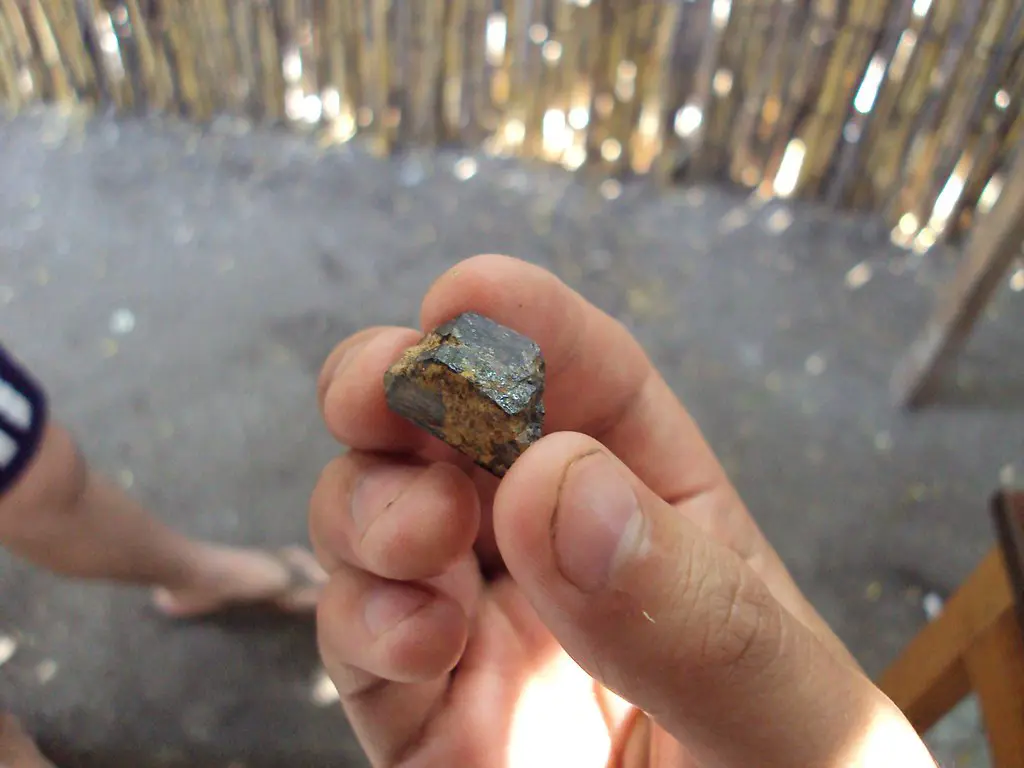
Coltan is not a mineral in itself, but the colloquial name given in Africa to a rock composed of two metallic minerals: columbite and tantalite. Its name is a contraction of both (COLumbite + TANtalite). The proportion between them varies, and its value primarily depends on the concentration of tantalite.
Columbite: It is the primary ore of niobium (Nb), a superconductor and heat-resistant metal.
Tantalite: It is the ore of tantalum (Ta), the metal that gives it its enormous strategic value due to its electrochemical and physical properties.
Why is it a Strategic Mineral?
Coltan is considered strategic because the tantalum it contains is irreplaceable in many high-tech applications. Its ability to create tiny, high-capacity capacitors was a fundamental pillar in the miniaturization of electronics. Without tantalum, smartphones, laptops, and other portable devices would not be as we know them today.
Its demand grew exponentially in the late 1990s and early 2000s, coinciding with the mobile phone boom and the popularization of the internet. This “coltan rush” caused its price and importance on the geopolitical stage to skyrocket.
Source of Conflict
Coltan mining, especially in the Democratic Republic of the Congo (DRC), has financed armed conflicts for decades. Armed groups control mines, use forced labor, and exploit the mineral to buy weapons and perpetuate violence. For this reason, coltan is one of the most well-known “conflict minerals,” along with tin, tungsten, and gold (known as 3TG).
Where is it found? The Geography of Coltan
Main Coltan Producers (2023-2024)
Although the Democratic Republic of the Congo holds most of the world’s reserves, production is more diversified to avoid dependence on a conflict zone. Rwanda and Brazil are also key players in the export of this mineral.
Main Refineries
The raw ore must be processed in specialized refineries to obtain pure tantalum. These facilities are concentrated in a few countries, mainly:
- China: Several refineries, dominating the market.
- United States: Global Advanced Metals (GAM).
- Germany: H.C. Starck Tantalum and Niobium.
- Kazakhstan: Ulba Metallurgical Plant.
- Estonia: Molycorp Silmet.
The Value Chain: Actors and Processes
Miners(Artisanal or Industrial)
Intermediaries(Local Traders)
Exporters(Licensed Companies)
Refineries(Process the ore)
Manufacturers(Create components)
Brands(Integrate components)
Extraction and Local Trade
The process begins with extraction, which is mostly artisanal in Central Africa:
- Digging: Miners dig pits several meters deep with shovels and picks, or they extract the mineral from riverbeds.
- Washing: They use pans to wash the soil and rock, separating the denser coltan.
- Sorting: They separate the coltan stones from other minerals by hand.
- Sale to Intermediaries: The ore is sold to local “traders,” often at the mine itself. The price is negotiated on the spot, based on weight and a visual estimate of quality.
- Transport: The coltan is transported in sacks from remote mines to larger trading centers, from where it is sold to exporting companies.
Main Buyers and Consumers
Ore Buyers (Refineries):
- H.C. Starck (Alemania)
- Global Advanced Metals (EE.UU.)
- Chinese refineries like Ningxia Orient Tantalum
Final Consumers of Tantalum (Brands):
- Technology: Apple, Samsung, Intel, Sony.
- Defense and Aerospace: Boeing, Airbus, Lockheed Martin.
- Medicine: Johnson & Johnson, Medtronic.
Market: Timelines and Outlook
The Coltan Boom
The global demand for coltan intensified dramatically between 1999 and 2001, during the so-called “dot-com bubble.” The mass production of the first generation of mobile phones and the PlayStation 2 video game console caused the price of tantalum to multiply by nearly ten, triggering a mining rush in the DRC.
Market Outlook
The demand for tantalum is projected to continue growing at a rate of 4-6% annually. The rollout of 5G technology, the Internet of Things (IoT), electric vehicles, and the continuous expansion of consumer electronics ensure its relevance. Prices are volatile and are set in metal markets like the London Metal Exchange (LME), influenced by supply, demand, and geopolitical stability.
Price Setting
The global price of coltan is not singular; it is based on the content of tantalum pentoxide (Ta2O5) it contains. It is negotiated through long-term contracts and in spot markets, with references from agencies like Fastmarkets (formerly Metal Bulletin).
The Problem: Conflict Minerals and Traceability
Regulation and Traceability
To combat the problem of conflict minerals, several initiatives and regulations have been created:
Dodd-Frank Act (Section 1502) – USA
Requires publicly traded companies in the U.S. to investigate their supply chain and declare whether their products contain minerals (3TG) from the DRC or neighboring countries, and if they finance conflict.
EU Conflict Minerals Regulation
Requires EU importers of 3TG to conduct “due diligence” checks on their supply chains to ensure they come from responsible sources.
Tin Supply Chain Initiative (ITSCI)
This is the most widespread traceability system in the Great Lakes region of Africa. It operates on a “bag and tag” system: ore from mines validated as “conflict-free” is sealed in bags with a numbered tag, allowing it to be tracked from the mine to the smelter.
Despite these efforts, significant challenges persist, such as the smuggling of ore from non-validated mines and corruption, which make it difficult to guarantee a 100% clean supply chain.